

Your premium heavyweight hoodie is more than a simple garment; it's a precision-engineered asset that deserves the same meticulous attention as a high-end timepiece. You've likely experienced the disappointment of a cracked screen print or a luxury tracksuit that lost its structural integrity after a single, incorrect wash cycle. In a global streetwear market valued at $216 billion in 2026, the focus has shifted from loud logos to the enduring quality of the fabric itself. This men's guide to clothing care symbols provides the expert knowledge you need to protect these investments with absolute confidence.
By mastering the latest ISO 3758:2023 standards, which were updated in December 2023 to include specific ambient temperature instructions, you'll ensure your wardrobe remains in mint condition. We'll decode the cryptic language of laundry tags and explain why the difference between "dry flat" and "tumble dry" is the key to preserving that signature urban luxe feel. This guide offers a comprehensive overview of modern textile maintenance, helping you extend the lifespan of your most valued pieces through professional-grade care.
Key Takeaways
- Understand the fundamental science of fabric density to recognize why premium heavyweight streetwear requires a more sophisticated care routine than standard garments.
- Utilize this men's guide to clothing care symbols to master the updated ISO 3758:2023 icons, ensuring you apply the precise thermal settings required to maintain garment structure.
- Identify the critical drying symbols that protect your investment; learning why the wrong heat level is the primary cause of cracked screen prints and texture degradation.
- Gain professional insight into the three-dot ironing system and the "Do Not Steam" directive to preserve the aesthetic integrity of technical and performance fabrics.
- Implement the DRIPrDRY methodology of washing gear inside out to ensure your signature pieces retain their immaculate finish and "fresh" feel for years to come.
Why Care Labels Matter: The Science of Streetwear Longevity
Every signature piece in your collection represents a deliberate choice in style and quality. Clothing care symbols are not merely suggestions; they constitute a universal language designed to preserve the structural integrity of high-end textiles. This international standards for care labels system ensures that the specific weave and density of your garments remain unchanged by environmental stressors. While fast fashion pieces are often treated as disposable, premium streetwear relies on fabric density that demands a specialized approach. A heavyweight 500gsm hoodie possesses a complex internal structure that reacts differently to thermal energy than a standard department store alternative. Maintaining that "urban luxe" aesthetic requires more than just careful wearing; it necessitates a deep understanding of how moisture and heat interact with premium cotton.
For collectors living in coastal areas like Shoreham-By-Sea, the local humidity levels can reach 80% on autumn mornings, making the adherence to specific drying symbols a matter of necessity rather than preference. Excessive moisture trapped in dense fibres can lead to mildew or a loss of the garment's original silhouette, turning a crisp profile into a distorted shadow of its former self. This men's guide to clothing care symbols is your roadmap to ensuring that every wash cycle functions as a restorative process rather than a destructive one. When you treat your wardrobe as an investment, the "Drip" factor remains immaculate for years.
The Cost of Ignorance: Shrinkage and Fading
High-energy wash cycles are the natural enemy of heavyweight cotton fibres. When exposed to excessive heat, these fibres contract violently, leading to the permanent shrinkage that ruins a perfect oversized fit. Proper care also prevents "pilling," where friction and heat cause tiny fibres to tangle into unsightly balls on your favourite tracksuits. As we move through 2026, new fabric technologies like holographic overlays and temperature-adaptive textiles require updated knowledge to avoid irreversible damage to these delicate surfaces. Precision in temperature selection is the only way to safeguard these modern materials.
Reading the Label: Where to Find the Info
Precision begins with locating the data. You'll typically find the care tag stitched into the lower left side seam of hoodies and t-shirts, or tucked inside the pocket of retro shell suits to avoid skin irritation. If a label has been removed or become unreadable through wear, always default to the most conservative care method possible, such as a cold hand wash and flat drying. Care symbols serve as the manufacturer's blueprint for garment survival.
Washing Symbols: Mastering the Tub and Temperature
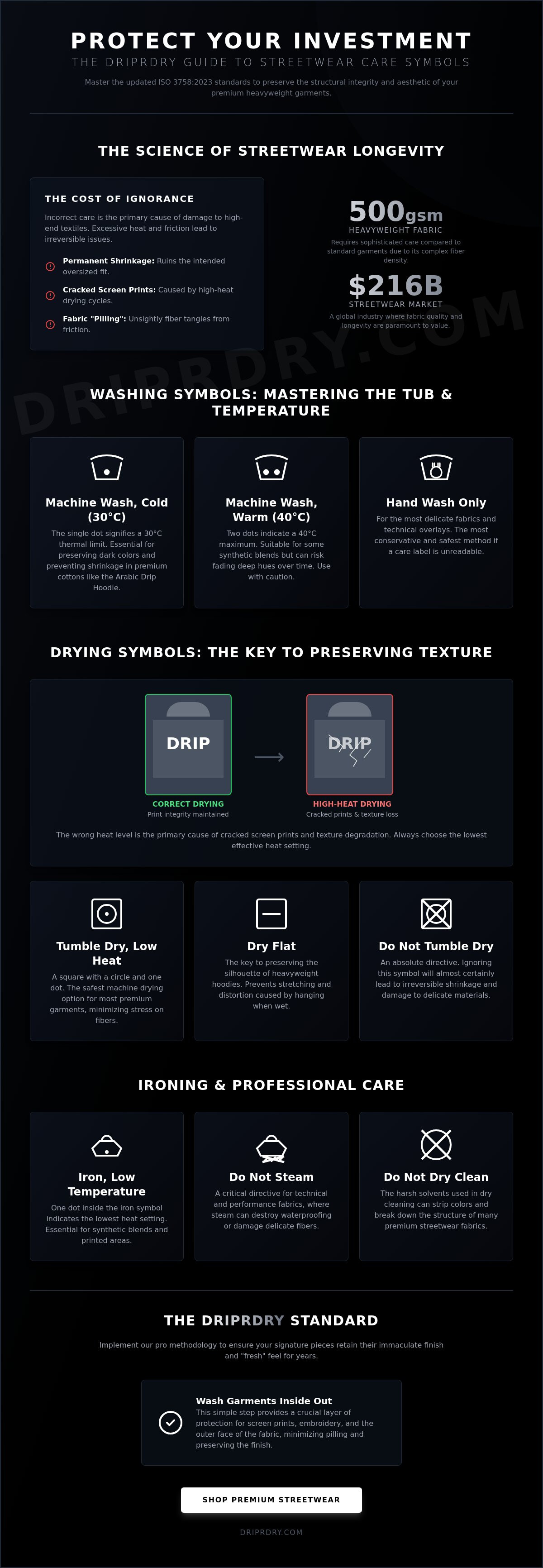
The washtub icon serves as the foundational element for any professional laundry routine. This symbol dictates whether a garment belongs in the machine or requires the delicate touch of a manual hand wash. Within this men's guide to clothing care symbols, we prioritize the understanding of thermal thresholds as a means of asset protection. A single dot inside the tub signifies a 30°C limit, while two dots indicate a 40°C maximum. While ten degrees might seem negligible to a casual observer, this specific thermal boundary determines whether your black hoodies retain their deep, midnight hue or begin a slow, irreversible descent into a faded charcoal.
Precision in temperature selection is the most effective way to ensure the longevity of high-density fabrics. For those who curate a collection of Arabic Drip Hoodies, cold washes are practically non-negotiable. High temperatures agitate the premium cotton fibres, leading to micro-tears that cause shrinkage and compromise the intended oversized silhouette. Conversely, retro shell suits featuring synthetic blends are particularly vulnerable to 60°C cycles; such intense heat can cause the fine plastic-based threads to lose their structural integrity, leading to a dulling of the characteristic sheen. For a deeper technical understanding of these categories, the official Guide to Care Symbols provides a comprehensive breakdown of international standards.
Cycle Intensity: Normal vs. Permanent Press
The horizontal bars located beneath the washtub icon indicate the required mechanical action of the machine. A single bar represents the "Permanent Press" cycle, which utilizes a slower spin to minimize the formation of deep wrinkles in heavier fabrics. This setting is ideal for maintaining the crisp, immaculate lines of premium tracksuits. When you encounter a double bar, the garment requires a "Gentle" or "Delicate" cycle. This is essential for pieces with high-stitch count embroidery, as the reduced agitation prevents the threads from loosening over time. To ensure your wardrobe maintains its elite status, it's worth exploring premium streetwear essentials designed with these high standards in mind.
The Hand Wash and Wringing Protocols
When the washtub contains a hand, machine washing must be avoided entirely to protect complex screen prints or delicate attachments. Furthermore, the "Do Not Wring" symbol, depicted as a crossed-out twisted garment, is a critical instruction for streetwear enthusiasts. Manually wringing out a wet, heavyweight hoodie might seem efficient, but the sheer physical force can distort the fabric's memory. This leads to uneven hemlines and sagging collars that ruin the garment's visual perfection. By respecting these icons, you treat your clothing with the same level of care that a master craftsman applies to a bespoke project.
Drying and Bleaching: Preserving Fabric Texture
The square icon on your garment's tag represents the most critical phase of the preservation process. While the washing machine handles the removal of impurities, the drying method determines whether your clothing retains its original texture or suffers from irreversible heat damage. This men's guide to clothing care symbols emphasizes that drying is frequently more hazardous than washing for premium streetwear. A square containing a circle indicates machine drying is permissible, but the dots within that circle dictate the thermal intensity. One dot signifies low heat, while a crossed-out circle is a definitive command to avoid the tumble dryer entirely to save your screen prints and fabric density.
Natural drying icons provide specific instructions for air-drying that are often overlooked. A square with a horizontal line means "Dry Flat," which is essential for heavy hoodies to prevent gravity from stretching the fabric while wet. Three vertical lines indicate "Drip Dry," while two diagonal lines in the corner mean "Dry in Shade" to prevent UV rays from fading vibrant dyes. These symbols are the key to maintaining the value and aesthetic of your collection over several years.
The Tumble Dryer Trap
High temperatures act as a catalyst for the degradation of elastane and high-density cotton. In our men's tracksuit style guides, we highlight how maintaining the "urban luxe" silhouette depends on the elasticity of the ribbed cuffs and waistbands. Subjecting a 450gsm heavyweight hoodie to a high-heat cycle causes the fibres to become brittle, leading to a loss of that "fresh" feel and the eventual cracking of signature graphics. For technical garments, the "Low Heat" symbol is a non-negotiable instruction; it ensures that water-resistant coatings and performance layers remain functional. Air-drying is the preferred method for any piece you consider a long-term asset.
Bleaching Myths and Realities
The triangle symbol governs the use of bleaching agents, a category where mistakes are often permanent. An empty triangle permits any bleach, but a triangle with two diagonal stripes restricts you to non-chlorine, oxygen-based bleaches only. Chlorine bleach is the ultimate enemy of urban luxe apparel. It aggressively strips the protective layers of the cotton fibre, leading to premature thinning and an unsightly yellowed tint on white t-shirts. For brightening white garments, consider gentle oxygen-based alternatives or natural citrus-based solutions that preserve the fabric's integrity without the harsh chemical impact of traditional chlorine. Precision in these choices ensures your wardrobe remains in a state of visual perfection.
Professional Care: Ironing and Dry Cleaning Symbols
The final stage of maintaining a makulátlan appearance involves the precise application of heat and professional-grade finishing. Just as a high-end vehicle requires specific polishing techniques to preserve its paintwork, your urban luxe gear demands a disciplined approach to ironing. The iron symbol serves as a critical guide for thermal management. One dot indicates a maximum temperature of 110°C, which is the safest threshold for delicate synthetic blends. Two dots allow for 150°C, while three dots signify that a 200°C setting is required for heavyweight 100% cotton pieces. This men's guide to clothing care symbols emphasizes that exceeding these limits can lead to irreversible glazing or fibre melting, which permanently diminishes the garment's value.
The "Do Not Steam" icon, depicted as an iron with crossed-out vapor lines, is particularly vital for modern streetwear. Many contemporary designs utilize specialized adhesives for 3D prints or mixed-media textures that react poorly to moisture-laden heat. High-pressure steam can cause these elements to delaminate or warp, destroying the clean lines of your silhouette. Precision in choosing between dry heat and steam is what separates a well-maintained wardrobe from one that shows premature signs of wear.
Ironing Around the Drip
When handling Arabic calligraphy streetwear UK collections, the intricate embroidery requires a "reverse iron" approach. Pressing the design from the inside out ensures the threads remain vibrant and taut without direct contact with the hot metal plate. This technique prevents the flattening of high-stitch count details and protects the integrity of the artwork. For most modern blends, using a cool iron with a protective cloth is the safest way to remove wrinkles while maintaining a pristine finish.
When to Call the Professionals
The circle icon signifies that a garment requires professional intervention. Within this circle, specific letters like "P" or "F" communicate essential chemical protocols to your technician. A "P" indicates the use of Perchloroethylene, while an "F" mandates a flammable solvent for more sensitive fibres. Communicating these requirements clearly to your Shoreham cleaner ensures your high-end apparel receives the same level of care as a bespoke tailored suit. Be cautious of the "Do Not Dry Clean" symbol, which is often found on tech-wear with waterproof membranes. Chemical solvents can dissolve the delicate coatings that provide weather resistance. To ensure your entire collection maintains its premium quality, explore our latest signature streetwear arrivals designed for long-term value preservation.
The DRIPrDRY Standard: Pro Tips for Urban Luxe Care
The DRIPrDRY philosophy is built upon the belief that a garment's value is defined by its longevity and visual perfection. We specifically select fabric weights between 450gsm and 500gsm because these densities provide the characteristic "urban luxe" drape that lighter materials cannot replicate. However, these substantial fibres require a more thoughtful approach than standard retail items. This final section of our men's guide to clothing care symbols moves beyond the tag to establish a professional maintenance routine that ensures every piece remains in a state of visual excellence for years to come.
One unwritten rule governs every wash cycle: always turn your signature gear inside out. This simple action creates a physical barrier for the face of the fabric, protecting the delicate surface from the abrasive forces of the machine drum. It's a fundamental step in preserving the "fresh" feel of new tracksuits and preventing the micro-abrasions that lead to premature fading. For our heavyweight comfort hoodies, we advocate for an "Air Dry Only" policy. The sheer density of these pieces means they retain moisture longer; allowing them to dry naturally at room temperature prevents the structural warping that occurs in high-heat environments. Once dry, store your gear on wide, contoured hangers or folded flat. This maintains the original shoulder silhouette and prevents the fabric from stretching under its own weight.
Maintaining Signature Prints and Embroidery
The Arabic Drip series features intricate embroidery and high-definition prints that demand a specific chemical balance. We recommend using premium liquid detergents rather than traditional powders. Powdered soaps often fail to dissolve completely in the 30°C cold cycles required for premium streetwear; this leaves unsightly white residues on dark fabrics that can be difficult to remove without re-washing. This attention to detail is the core of the Dripr-experience. It's about keeping your gear looking exactly as it did when it first left the boutique, ensuring a makulátlan finish that lasts.
Final Checklist for Laundry Day
A disciplined approach to the washing process is the only way to achieve a tökéletes result every time. Before you begin, ensure you follow this professional sequence to protect your investment:
- Sort your collection by colour first, then sub-divide by the care symbols identified in the previous sections of this guide.
- Zip up all tracksuits and hoodies completely. Exposed metal teeth can snag on the fine knit of other garments, causing irreversible damage during the spin cycle.
- Check all pockets for loose items that could bleed ink or cause mechanical friction against the fabric.
- Use a mesh laundry bag for pieces with heavy embroidery to provide an extra layer of protection.
Precision in care is the final step in your style journey. Explore the latest DRIPrDRY collections and put your new mastery of clothing maintenance to the test with our most exclusive pieces yet.
Secure the Future of Your Urban Luxe Wardrobe
Mastering the intricate language of textile preservation is the final step in curating a world-class collection. This men's guide to clothing care symbols has provided the technical precision needed to navigate the latest ISO 3758:2023 updates and complex drying protocols. By prioritizing low-temperature washes and natural air-drying, you'll ensure your high-density fabrics retain their structural integrity and signature silhouette for years. You now possess the expert knowledge to prevent common failures like heat-induced shrinkage or delaminated screen prints.
Your investment in quality deserves a partner that shares your commitment to excellence. As an independent UK-based label, we specialize in heavyweight 400gsm+ cotton fabrics that demand this level of meticulous attention. Our expert-designed Arabic calligraphy pieces are engineered for those who refuse to compromise on either style or longevity. Now that you've mastered the science of garment care, it's time to add new assets to your rotation. Shop the Signature Drip Collection at DRIPrDRY and experience the peak of urban luxe craftsmanship. Your wardrobe's makulátlan future begins with a single, well-informed choice.
Frequently Asked Questions
What does a circle with a cross through it mean on a clothing tag?
A circle with a cross through it signifies that the garment must not be dry cleaned. Professional chemical solvents can cause irreversible damage to the specialized technical membranes or waterproof coatings often found in modern high-performance streetwear. Adhering to this specific instruction is vital for maintaining the durable protection and aesthetic value of your most complex technical pieces.
Can I tumble dry a 100% cotton heavyweight hoodie?
You should generally avoid tumble drying a 100% cotton heavyweight hoodie to prevent significant fibre shrinkage. The intense heat of a dryer causes dense 500gsm cotton fibres to contract violently, which permanently destroys the intended oversized silhouette of the garment. Instead, choose to dry the item flat on a clean surface to ensure the piece retains its original "urban luxe" shape and structural integrity.
What is the difference between one dot and two dots on a washing symbol?
One dot indicates a maximum water temperature of 30°C, while two dots signify a limit of 40°C. This 10-degree difference is a critical detail in this men's guide to clothing care symbols, as higher temperatures can lead to the premature fading of deep, dark dyes. Precision in temperature selection is the most effective way to protect the makulátlan appearance of your premium luxury tracksuits over time.
Is it okay to ignore the 'Dry Clean Only' label for streetwear?
Ignoring the 'Dry Clean Only' label is a risk that frequently results in the permanent loss of a garment's structural integrity. While home machines offer convenience, certain luxury materials and internal structured elements are engineered specifically for professional chemical solvents rather than water. Attempting to wash these items at home can lead to warping or unsightly water spots that diminish the tökéletes finish of the piece.
How do I wash clothes with both embroidery and screen prints?
Washing clothes that feature both embroidery and screen prints requires turning the garment inside out and utilizing a cold 30°C cycle. This technique creates a physical barrier that protects intricate threads from snagging while reducing the mechanical friction that causes screen prints to crack or peel. Placing these items in a mesh laundry bag provides an additional layer of precision care for your most valued signature gear.
What happens if I wash a 'Hand Wash Only' item in the machine on a delicate cycle?
Using a delicate machine cycle for a 'Hand Wash Only' item still carries a significant risk of fabric distortion and fibre degradation. Even the gentlest machine settings involve a level of mechanical agitation that manual hand washing is designed to avoid entirely. For pieces featuring expert-designed Arabic calligraphy, the controlled, gentle pressure of a manual wash is the only way to guarantee the preservation of every fine detail.
Does 'Do Not Bleach' also apply to colour-safe stain removers?
The 'Do Not Bleach' symbol, represented by a solid crossed-out triangle, suggests avoiding all harsh oxidizing agents, including many colour-safe removers. These chemicals can weaken high-density 400gsm cotton fibres over time, leading to premature thinning of the material. To maintain the value and tökéletes surface of your apparel, it's safer to utilize natural, citrus-based spot treatments that provide effective cleaning without the harsh chemical impact.
Why do some clothes have a symbol for 'Dry in the Shade'?
The 'Dry in the Shade' symbol, indicated by two diagonal lines in a square, exists to protect vibrant dyes from the bleaching effects of direct ultraviolet radiation. Exposure to intense sunlight for as little as 120 minutes can initiate photodegradation, leading to uneven fading on dark or neon streetwear. This instruction is a vital component of this men's guide to clothing care symbols for maintaining long-term colour saturation and visual perfection.