

The true cost of a premium urban luxe hoodie isn't found on the price tag; it's found in the meticulous care required to maintain its midnight depth. Most enthusiasts watch in frustration as their investment loses its soul after just three cycles in the machine. If you've ever pulled a once-noir garment from the drum only to find a dull, charcoal shadow of its former self, you're certainly not alone. Learning how to keep black hoodies from fading is an essential skill for anyone serious about the longevity of their streetwear. At DRIPrDRY, we view our heavyweight cotton as a canvas that deserves to stay pitch-black for years, not just weeks.
You likely feel that high-quality fabric should be resilient enough to handle a standard wash, yet the reality of Shoreham-By-Sea's hard water and aggressive mechanical friction tells a different story. This guide provides the professional techniques needed to master pigment preservation. We'll explore the latest 2026 enzyme-based detergent technologies and the specific steps required to protect our signature Arabic calligraphy embroidery from surface pilling. By understanding how to neutralize mineral-heavy water and manage temperature, you'll ensure your garments retain the same aesthetic perfection they possessed the day they first arrived.
Key Takeaways
- Implement the "Inside-Out" protocol and cold-water cycles to effectively manage the mechanical friction and chemical stress that cause pigment bleed.
- Learn how to keep black hoodies from fading by replacing the destructive heat of tumble drying with strategic, shaded air-drying techniques.
- Utilize professional tools like mesh laundry bags to safeguard premium Arabic calligraphy embroidery and maintain the flawless surface of your heavyweight cotton.
- Recognize the critical relationship between high-GSM fabric quality and long-term colour retention to ensure your urban luxe investments remain pitch-black for years.
Why Do Black Hoodies Fade? The Science of Pigment Loss
The deep, obsidian tone of a premium hoodie is achieved through heavy dye saturation, yet black pigment is notoriously volatile compared to lighter shades. Black dye molecules are larger and often sit closer to the surface of the cotton fiber, making them the first to be shed when the fabric is stressed. This process is known as pigment bleed. Understanding the molecular science behind this loss is the first step in mastering how to keep black hoodies from fading. When you invest in high-end streetwear, you aren't just buying a garment; you're acquiring a complex material that requires a specific preservation strategy.
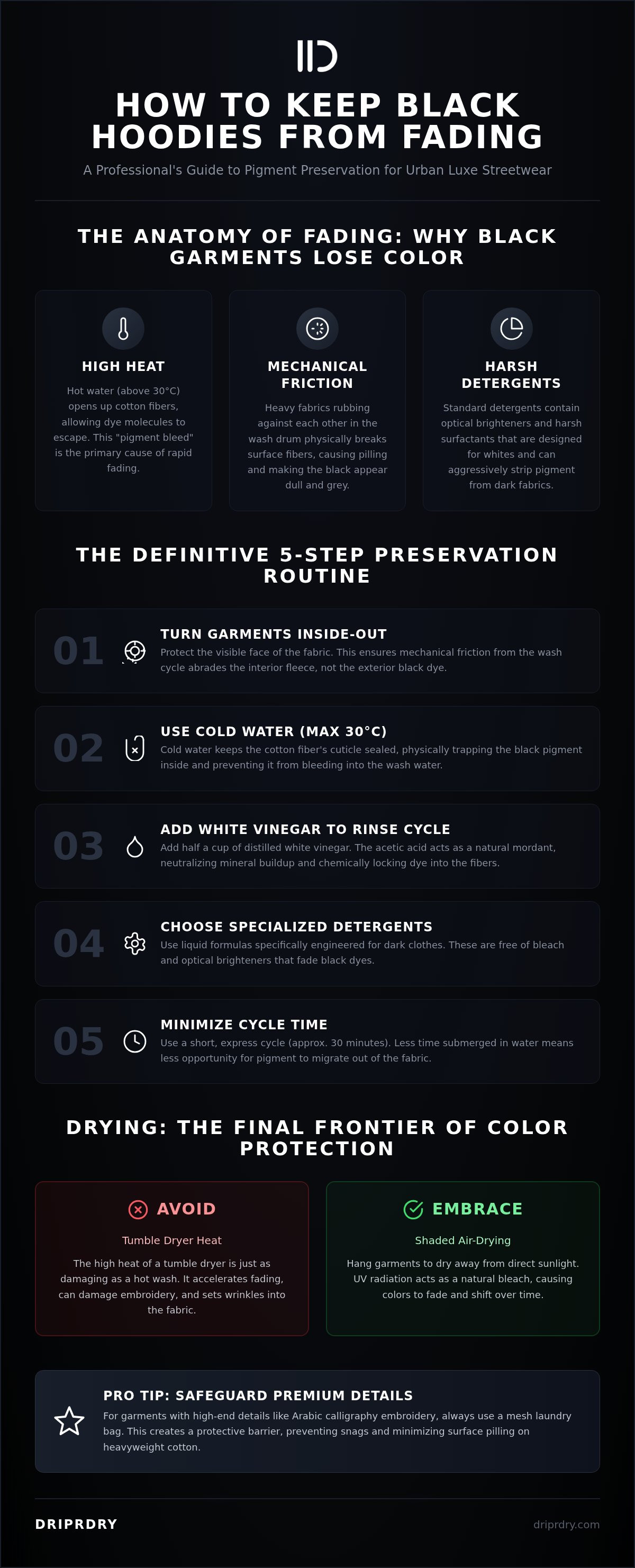
Cotton is a natural fiber with a microscopic, scale-like outer layer called a cuticle. In high-temperature environments, such as a standard 60°C wash cycle, these scales expand and open. This thermal reaction allows water and detergents to penetrate deep into the core, washing away the loosely bound black pigment. It's essentially an invitation for the dye to escape into the drain. Maintaining a closed cuticle through temperature control is the only way to lock that pigment in place for the long term.
It is vital to distinguish between true fading and surface dulling, as they require different solutions. Fading is the actual removal of dye particles from the fiber. Dulling, however, occurs when hard water minerals and lint build up on the fabric's surface. In areas like Shoreham-By-Sea, the high mineral content in the water can leave a cloudy residue. This creates a veil that masks the underlying black, making the garment look tired even if the dye remains perfectly intact.
The Role of Friction in Streetwear Decay
Heavyweight cotton garments possess a significant mass that generates intense friction during the wash cycle. As these heavy fabrics rub against one another in the drum, the mechanical agitation physically snaps the delicate surface fibers. This leads to pilling, which is more than just an aesthetic nuisance. Pilling creates a micro-shadow effect across the surface of the garment that traps light and makes black fabric appear grey or dusty.
Chemical vs. Natural Dye Degradation
The integrity of the pigment is also under constant assault from external chemical factors. Many standard detergents contain harsh surfactants and optical brighteners designed to make whites appear more vibrant, but these chemicals strip the deep tones from natural fibers. This is why the high-quality dye in Arabic Drip Hoodies requires specific pH-neutral care to remain vibrant. Additionally, UV radiation from the sun acts as a natural bleach. The photons break the chemical bonds of the dye, leading to that tell-tale reddish-brown tint often seen on sun-damaged cotton.
The Definitive 5-Step Washing Routine to Stop Fading
Maintaining the pristine, "blacked out" aesthetic of your wardrobe requires a disciplined approach to laundry. To master how to keep black hoodies from fading, you must treat every wash as a preservation process rather than a chore. While the wash cycle is vital, your strategy for Drying and Storage must be equally precise to ensure the pigment remains locked within the fibers. Follow this professional 5-step routine to protect your investment.
- Step 1: The Inside-Out Rule. Always invert your hoodie before it enters the machine. This simple action ensures that the mechanical friction of the drum and other garments affects the interior fleece rather than the visible black face.
- Step 2: Thermal Control. Set your machine to a cold wash or a maximum of 30°C. As we explored previously, heat opens the cotton cuticle; cold water keeps it sealed, trapping the dye inside.
- Step 3: The Vinegar Fixative. Add half a cup of white distilled vinegar to the rinse cycle. The acetic acid acts as a natural mordant, neutralizing detergent residues and chemically "locking" the black pigment into the cotton.
- Step 4: Specialized Liquid Detergents. Use a liquid formula specifically engineered for darks, such as the 2026 Perwoll Renew Black. These formulas lack the harsh bleaching agents found in standard detergents.
- Step 5: The Short Cycle Strategy. Minimize the time your garment spends submerged. A 30-minute express cycle is usually sufficient for high-quality streetwear that isn't heavily soiled, reducing the window for pigment migration.
The Shoreham Hard Water Factor
Residents of Shoreham-By-Sea and the wider West Sussex area must contend with exceptionally hard water served by Southern Water. The high concentration of calcium and magnesium in local pipes creates mineral deposits that cling to heavyweight cotton. When these minerals dry, they create a white, cloudy film that mimics the appearance of fading. Using the vinegar hack mentioned in Step 3 is particularly effective here, as the acid dissolves these minerals before they can dull your "pitch-black" finish. Many "grey" hoodies in Shoreham are actually just calcified; a proper acidic rinse can often restore their original depth.
Detergent Dos and Don'ts
Powder detergent is the primary enemy of premium black cotton. The undissolved granules act like sandpaper in the drum, physically scrubbing the dye from the surface. When caring for a heavyweight comfort hoodie, you should only use half the recommended dose of a dedicated dark liquid. Overloading on detergent creates a surplus of surfactants that are difficult to rinse out, leading to a stiff, dusty texture. If you're looking to upgrade your rotation, our Signature Drip Hoodie is crafted from high-density cotton that responds exceptionally well to these refined care techniques. Always avoid "all-purpose" liquids containing optical brighteners, as these are designed to reflect light and will inevitably make your blacks look washed out under sun exposure.
Drying and Storage: Protecting Your Drip Beyond the Machine
The preservation of a premium garment does not conclude when the wash cycle ends. In many ways, the drying phase is the most volatile stage of garment care, where a single oversight can undo the meticulous work of a temperature-controlled wash. If you are committed to mastering how to keep black hoodies from fading, you must view the tumble dryer as the primary antagonist to your collection. Heat is the ultimate pigment killer, acting as a thermal catalyst that degrades both the dye bonds and the physical structure of the cotton fibers.
To maintain the deep, light-absorbing quality of a high-GSM garment, the "Flat Dry" technique is non-negotiable. Heavyweight streetwear, such as an Urban luxe blacked out hoodie, absorbs a significant volume of water. Hanging these pieces while wet causes the weight of the water to pull at the fibers, leading to "shoulder bumps" and a distorted silhouette. Instead, lay the garment flat on a clean, light-colored towel in its natural shape. This method ensures the architectural integrity of the hoodie remains as sharp as the day it was manufactured.
The Dangers of Tumble Drying
The convenience of a tumble dryer comes at a steep aesthetic cost. The intense, circulating heat essentially "toasts" the cotton fibers, stripping away the natural moisture that keeps the fabric soft and saturated. This thermal stress makes the fibers brittle, leading to the micro-fractures that we perceive as a grey, dusty hue. It is a sobering reality for any enthusiast to realize that the lint in your dryer trap is actually the "faded" remains of your clothes, physically stripped away by heat and agitation. Every cycle in the dryer represents a measurable loss in fabric density and color depth.
Indoor Drying Strategies for the UK Climate
In the damp climate of Shoreham-By-Sea, air-drying a Heavy weight comfort hoodie presents unique challenges. While it's tempting to drape your gear over a radiator, this localized, intense heat is nearly as damaging as a tumble dryer, often leading to "crispy" fabric and uneven fading. The professional 2026 solution is the use of a high-capacity dehumidifier in a small, closed room. This technology extracts moisture from the air, allowing the fabric to dry naturally and quickly without the need for destructive heat. To prevent the "musty" scent often associated with drying thick cotton indoors, ensure maximum airflow and never fold the garment until it's entirely bone-dry. By avoiding direct sunlight during this process, you eliminate the risk of UV bleaching, keeping your blacks truly "pitch-black."
Specialist Care for Embroidered and Heavyweight Streetwear
Heavyweight cotton at the 400gsm+ level presents a unique challenge that generic laundry guides often ignore. While our previous chapters focused on pigment preservation, protecting the intricate Arabic calligraphy streetwear UK designs requires a more tactile, artisan approach. The high stitch density of our embroidery can act as a hook for other garments in the drum. A mesh laundry bag is a non-negotiable tool here; it creates a protective barrier that prevents zippers or buttons from snagging the delicate threads of your Signature Drip Hoodie.
Maintaining the "matte" aesthetic of an Urban luxe blacked out hoodie is equally critical. Over-exposure to water and surfactants can eventually give the cotton a slick, synthetic-looking sheen that compromises the premium look. To avoid this, prioritize spot cleaning. Using a damp microfiber cloth and a single drop of pH-neutral detergent allows you to target isolated marks without subjecting the entire garment to a full immersion. This remains one of the most effective secrets in how to keep black hoodies from fading: simply reduce the frequency of the wash cycle itself.
Maintaining Signature Drip Embroidery
Ironing an embroidered piece requires precision and a gentle touch. Never apply a dry iron directly to the threads, as the intense heat can melt synthetic embroidery filaments or cause them to shrink. Instead, iron the garment inside out using a high-steam setting and a protective pressing cloth. This technique prevents the "buckling" effect where the fabric around the embroidery puckers and loses its flat, professional finish. High-stitch count designs are also susceptible to distortion at high RPMs. Reducing your machine's spin speed to 600 or 800 RPM protects the structural bond between the thread and the heavyweight cotton.
The 'Less is More' Philosophy
We advocate for a 5-10 wear rule: unless a hoodie is visibly soiled, it doesn't need a full wash. Between these cycles, use a high-quality fabric refresher to maintain that "Signature Drip" scent without the need for water. For your most exclusive urban luxe items, professional dry cleaning is a valid investment. A specialist who understands luxury streetwear can use non-aqueous solvents that clean the garment without the pigment-stripping risks associated with water. If you are looking to elevate your wardrobe with pieces built for longevity, browse our latest Signature Drip Tracksuit collection, where every stitch is designed for the discerning enthusiast.
Why Fabric Quality is the Best Defence Against Fading
Every maintenance technique we have explored in this guide hinges on a single, immovable factor: the inherent quality of the textile. When considering how to keep black hoodies from fading, the conversation must begin with the raw material long before the first wash cycle. High-grade streetwear is distinguished by its GSM, or Grams per Square Metre, which measures the density and weight of the fabric. A higher GSM doesn't just provide a more substantial feel; it provides a more complex internal structure capable of holding a higher volume of dye molecules.
While poly-blends are often used in mass-market production to reduce costs, they are notoriously difficult to keep "pitch-black." Synthetic fibers like polyester do not absorb natural black dyes with the same intensity as organic cotton, often resulting in a garment that looks charcoal or "heathered" after only a few months. The DRIPrDRY brand is built upon a commitment to 100% heavyweight cotton, ensuring that the "Urban Luxe" aesthetic remains consistent and deep throughout the garment's lifespan. By starting with a superior canvas, the preservation techniques we've discussed become significantly more effective.
Heavyweight Cotton vs. Fast Fashion
The primary reason thin, high-street hoodies lose their luster so quickly is the lack of physical fiber available to retain pigment. Fast fashion garments are often produced with "direct dyes" that sit on the surface of the fiber, whereas premium independent labels utilize reactive dyes. Reactive dyeing creates a permanent chemical bond between the dye molecule and the cotton fiber, making it far more resistant to the pigment bleed we analyzed in our opening chapter. A 400gsm hoodie will naturally look blacker than a 200gsm alternative because the higher density of cotton fibers allows for a significantly more intense saturation of black pigment, creating a deeper visual weight. Furthermore, our use of pre-shrunk fabrics ensures that the cotton cuticle remains stable, preventing the structural warping that often leads to premature fading.
Investing in Shoreham’s Urban Luxe
The growing Urban fashion Shoreham-By-Sea scene is characterized by a shift toward "slow fashion" values, where longevity is prioritized over disposable trends. Investing in a single, high-quality garment and applying professional care is the ultimate strategy for fade prevention. When you choose a piece with superior surface integrity, you aren't just buying a hoodie; you're securing a long-term aesthetic asset. We invite you to experience this commitment to quality firsthand by exploring the latest Arabic Drip collection, where every heavyweight piece is engineered to maintain its midnight depth for years to come.
Preserving the Soul of Your Streetwear
Mastering the art of garment care is a profound commitment to the aesthetic perfection that defines the urban luxe lifestyle. We have explored the technical nuances of pigment retention, from the thermal control of cold-water cycles to the chemical protection provided by acetic acid rinses. By internalizing these professional techniques, you shift from simply washing clothes to actively preserving the integrity of your collection. Understanding how to keep black hoodies from fading ensures that the deep, light-absorbing noir of your favorite pieces remains a permanent fixture of your wardrobe rather than a fleeting experience.
Ultimately, the most sophisticated care routine relies on a foundation of exceptional quality. As an independent UK brand established in 2021, we prioritize the use of heavyweight 400gsm+ cotton and signature Arabic embroidery to ensure our garments withstand the test of time. These premium materials are designed to lock in pigment and maintain their architectural silhouette through every season. We invite you to Shop the Arabic Drip Collection at DRIPrDRY and experience the difference that uncompromising craftsmanship makes. Your investment deserves nothing less than a lifetime of pitch-black excellence.
Expert Care: Frequently Asked Questions
Is it better to hand wash or machine wash a black hoodie?
Machine washing on a gentle, cold cycle is generally superior for heavyweight cotton as it ensures an even distribution of water and detergent. Hand washing often leads to uneven rinsing and excessive wringing, which can stretch the fibers and cause local pigment loss. Modern machines with specialized settings provide the precise mechanical control needed to maintain the deep black finish without the risk of human error or physical fiber stress.
Can I use salt to stop my black clothes from fading?
Salt is a traditional mordant that can help set certain dyes in new garments, but it is less effective for modern reactive-dyed streetwear. While adding a tablespoon of salt to the first wash may provide a minor benefit, it cannot compete with the pigment-locking properties of white vinegar or specialized 2026 detergents. For premium heavyweight cotton, focusing on temperature control and pH-neutral liquids remains the most reliable strategy for long-term color retention.
How often should I really be washing my heavyweight hoodie?
You should aim to wash your heavyweight hoodie only after 5 to 10 wears, provided it isn't visibly soiled. Frequent immersion is the primary cause of fiber degradation and pigment bleed. Between cycles, we recommend using a high-quality fabric refresher or hanging the garment in a well-ventilated area to maintain its freshness. This minimalist approach is a cornerstone of how to keep black hoodies from fading while preserving the matte, luxe finish.
What is the best temperature to wash black streetwear?
The absolute best temperature for black streetwear is a cold wash, typically 20°C or 30°C at most. Heat is a thermal catalyst that forces the cotton cuticle to expand, allowing dye molecules to escape into the water. By keeping the water cool, you ensure the fibers remain sealed and the pigment stays locked within the core of the 400gsm cotton. This simple temperature adjustment is the most effective defense against premature greying.
Does white vinegar actually set the dye in black fabric?
Yes, white distilled vinegar acts as a natural fixative by neutralizing alkaline detergent residues that can strip color. The acetic acid in the vinegar helps to close the fabric fibers and lock the pigment in place during the rinse cycle. It is also exceptionally effective at dissolving mineral deposits from Shoreham's hard water, which often create a dull, cloudy veil over the deep black surface of your favorite garments.
How do I fix a black hoodie that has already faded to grey?
While you cannot physically reverse dye loss, you can restore a garment's appearance using a high-quality fabric dye specifically formulated for 100% cotton. Look for reactive dyes that create a permanent chemical bond. Alternatively, using a 2026 detergent with cellulase enzymes can help by removing the microscopic pilling that reflects light and makes the fabric look grey, effectively revealing the darker pigment still trapped beneath the damaged surface fibers.
Can I use a tumble dryer on a low heat setting?
We strongly advise against using a tumble dryer, even on a low heat setting, for premium black streetwear. Even minimal heat causes the cotton fibers to become brittle and eventually snap; this creates the lint that represents your garment's lost density and color. Air-drying your hoodie flat in a shaded area remains the only professional method to ensure the pigment remains saturated and the architectural silhouette of the heavyweight fabric stays intact.
Why is my black hoodie getting white streaks after washing?
White streaks are typically caused by undissolved powder detergent or mineral buildup from hard water areas like West Sussex. These residues cling to the dense fibers of heavyweight cotton and become visible once the fabric dries. To prevent this, always use a liquid detergent designed for darks and ensure you aren't overloading the machine. A secondary rinse cycle with a splash of white vinegar will effectively dissolve these streaks and restore the obsidian depth.